
The short answer
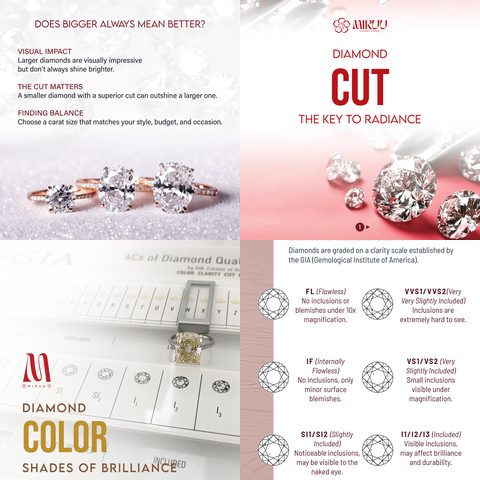
The 4Cs are carat, cut, color, and clarity. Use them as buyer questions, not trophies: what shows on the hand, what gives the diamond life, what reads warm or white, and what the unaided eye can actually see.
Start with what shows on the hand
Most buyers meet diamond language all at once: carat weight, cut grade, color, clarity, setting style, and budget. That can make every option feel harder than it is.
The useful move is to bring each grade back to the ring. A diamond that suits a slim solitaire may not be the stone you would choose for a bolder halo setting.
The four questions behind the 4Cs
Think of the 4Cs as four lenses, not four trophies to collect. Each one is useful only when it changes how the ring will look, feel, or fit what you want to spend.
Protect sparkle before you chase a larger number.
The setting can make the same grade feel different
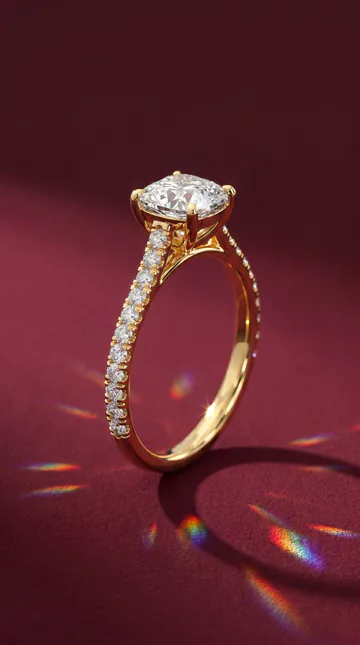
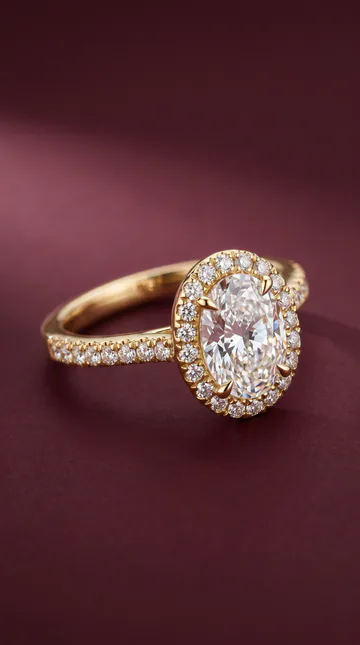
A halo can make presence feel more generous. Yellow gold can make warmth feel intentional. Prongs can hide a small inclusion. That is why the 4Cs should be read beside the ring design, not alone on a report.
Use the chart to ask better questions
This diamond 4 C chart is a quick way to see what each C measures and what to ask when you are looking at actual stones.
| C | What it measures | Buyer question | Where flexibility may exist |
|---|---|---|---|
| Carat | Weight | How much presence do you want on the hand? | A slightly lower weight can still look generous with the right shape and setting. |
| Cut | Light performance and workmanship | Will the diamond look bright and lively? | Less room to compromise if sparkle is important. |
| Color | Colorless to warm appearance | Will the diamond look white enough in its setting? | Near-colorless or warmer choices can work depending on metal and taste. |
| Clarity | Internal and surface characteristics | Is anything visible or distracting without magnification? | An eye-clean diamond can be practical even if it is not near the top of the scale. |
Carat is visible, but easy to overbuy
Carat is easy to talk about because it is a number. That also makes it easy to over-focus on. A one-carat diamond is not automatically more beautiful than a smaller diamond, and it may not even look dramatically larger if its proportions make it face up smaller.
Use carat as a presence question. Does the ring need a strong center-stone look, or would a more balanced stone leave room for cut quality, setting detail, or a preferred metal?

Cut is where sparkle lives
Cut is where a diamond's liveliness often shows. A well-cut diamond can look brighter and more energetic than a larger stone with weaker light return.
Ask to judge sparkle alongside measurements. If two stones are close in price, the one with stronger cut quality may be more satisfying than a simple jump in size.
Color matters most when the
setting reveals it
The D-to-Z color scale gives the industry a way to describe how colorless or warm a diamond appears. In a ring, the difference between nearby color grades can be harder for a buyer to notice, especially when the diamond is mounted.
Metal matters. A cool white metal may make warmth easier to notice, while yellow or rose gold can make a warmer stone feel intentional.
Clarity is about what the eye can
actually see
Clarity grades describe inclusions and blemishes, but the grading process looks closer than a person usually does when admiring a ring. Many characteristics are small, off to the side, hidden by a setting, or visible only under magnification.
"Eye-clean" is useful buyer language because it asks whether inclusions are obvious to the unaided eye in normal viewing.
Spend where your partner will notice
The 4Cs become useful once real spending choices enter the conversation. You are rarely choosing between "good" and "bad." You are choosing which visible result deserves more attention.
For visible size
Put more attention on carat, shape, and setting style, but protect cut enough that the stone still looks lively. This path is for buyers who care about presence on the hand and are willing to be flexible on color or clarity if the stone remains pleasing in person.
For sparkle first
Start with cut quality. A slightly smaller diamond with stronger light performance can feel more alive than a larger diamond that looks flat. Then check whether the color and clarity choices still work cleanly in the setting.
For a balanced ring
A balanced ring usually avoids extremes. Choose enough carat for the design, enough cut for brightness, enough color for the metal, and enough clarity for an eye-clean impression. The answer gets clearer when you look at actual stones together.
Not sure how to balance the 4Cs?
Include your ring peg, preferred stone shape, and budget range. Ask to review specific stones and settings in plain language.
Ask which C to prioritizeWhere first-time buyers waste money
- Judging carat as size. Carat is weight. Shape and proportions change how large the diamond appears.
- Ignoring cut. If sparkle matters, weak cut quality can make an otherwise impressive grade sheet feel disappointing.
- Overpaying for invisible clarity. A higher clarity grade may not change the look if both diamonds are eye-clean.
- Comparing diamonds only on paper. Reports help, but setting, metal, shape, and personal taste change the way a stone reads.
- Trying to maximize every C. Most real purchases require prioritization. Decide what your partner will notice most.
Bring every grade back to the setting
In a custom ring conversation, the 4Cs are not separate from design. The setting can make a stone appear larger, warmer, cleaner, softer, or more architectural. A slim solitaire, a halo, a cathedral setting, and a low-profile design can each make a different diamond choice feel right.
The useful consultation question is not "What grade should I buy?" It is "Given this setting and what I am comfortable spending, where should the diamond priorities sit?" The 4Cs give you the vocabulary for that conversation, and the custom process applies it to a real ring.
If you remember three things
- The 4Cs are carat, cut, color, and clarity.
- Use the 4Cs to structure the diamond conversation, not to chase every high grade.
- Cut often deserves early attention because it affects sparkle.
- Carat is weight; visible size also comes from shape, proportions, and setting.
- Color and clarity are practical questions: what will the eye see once the stone is worn?
- A custom consultation is useful because ring design changes which grades matter most.
What to ask any jeweler, including Miruu
- Which C should I prioritize for this setting and the amount I am comfortable spending?
- Can we look at a size-first option and a sparkle-first option?
- Will this color grade look white enough in the metal I want?
- Is this stone eye-clean in normal viewing?
- What does the grading information tell us, and what does it not tell us?
FAQ
What are the 4Cs of a diamond?
The 4Cs are carat, cut, color, and clarity. They are a shared grading framework for comparing diamonds before choosing a ring.
Which of the 4Cs should I prioritize first?
Many buyers start with cut because it strongly affects sparkle, then weigh carat, color, and clarity around the ring design and what they plan to spend.
Is carat the same as diamond size?
No. Carat measures weight. Visible size also comes from shape, cut proportions, and how the stone is set.
Do I need a flawless diamond for an engagement ring?
Not usually. Many inclusions are only seen under magnification, so the practical question is whether the stone looks eye-clean in normal viewing.
How should I read a diamond grading report?
Bring the report back to the ring. The useful question is what the grading details change in the actual stone, setting, and hand presence.
References
For diamond grading language, start with GIA 4Cs education and GIA diamond buying guidance. Use those standards as a shared vocabulary, then judge the stone in the setting you are considering.
Related guides


Ready to look at real options?
Include your ring peg, stone shape, and budget range. A consultant will contact you through your chosen channel to discuss how the 4Cs apply to your ring.
Review the 4Cs for your ring